
Natural vs Lab Grown Diamonds: Which is Right for You?

If you are choosing a diamond, you have likely asked the biggest question of all: Should I go natural or lab grown? It can be confusing, however, once you understand how each one is made and what that means for rarity, price, and sentiment, the decision becomes much easier.
This guide breaks down the difference between natural and lab grown diamonds so that you can choose with confidence and clarity.
Watch my full series of Natural vs. Lab Grown Diamonds starting here.
What is the Difference Between Natural and Lab Grown Diamonds?
In a word, time. Natural diamonds form deep within the earth’s crust over millions to billions of years. It begins with carbon atoms deep within the earth’s crust which are subjected to intense heat and pressure which causes the carbon atoms to grow into what we know as diamonds. Volcanic activity brings these diamond veins to the surface where the rough gems can be mined and extracted. They are then cut, polished, and graded and certificated.
Lab grown diamonds are created in a controlled manmade environment in a matter of weeks. A slither (called “seed’) of a natural diamond is subjected to the same heat and pressure as natural diamonds which causes it to grow into a rough lab grown diamond. These too are cut, polished, and graded and certificated. Lab grown diamonds have the same optical, chemical and structural properties as natural diamonds. The key difference is origin, not beauty.
Are Lab Grown Diamonds Real Diamonds?
Yes, lab grown diamonds are real diamonds. Think of it like cloning, it's the same genetic material, just created in a different way. My favourite analogy is thinking of a baby that's conceived by IVF versus a baby that's conceived naturally.
Lab grown diamonds are not simulants such as cubic zirconia or moissanite. They are different materials that can look similar, but they are not diamonds. Lab grown diamonds are diamonds, just simply made above ground
Do Natural and Lab Grown Diamonds Look the Same?
Yes, they're optically identical. They have the same crystallised structure and sparkle. They are also as hard and durable as natural diamonds.
Specialised equipment is needed to distinguish the difference. Your eyes will not be able to tell which is which.
How are Lab Grown Diamonds Made?
Lab grown diamonds are typically created using one of two methods, which I talk about here.


-
Chemical Vapour Deposition, also known as CVD
A small diamond seed is placed into a chamber filled with carbon rich gas. Heat breaks the gas apart and carbon atoms settle onto the seed layer by layer, growing a diamond. CVD is The Diamond Expert’s preferred growth method for premium lab grown diamonds, as it can produce exceptionally pure, crisp stones, especially in near colourless grades.
 HPHT Lab Grown Diamond Machine
 HPHT Lab Grown Diamonds Prior to Cutting
-
High Pressure High Temperature, also known as HPH
This method recreates the intense heat and pressure found in the earth. Carbon is transformed into diamond under these conditions. Metal alloys are often used to support growth, which can sometimes result in metallic tints or inclusions. Therefore, we opt not to use HPHT lab grown diamonds.
Both methods create real diamonds. What matters most is the quality of the finished stone and the certification that confirms it.
Why are Natural Diamonds Rarer?

Naturally Mined Diamond Prior to Cutting
Natural diamonds are a finite, natural resource and their formation is extraordinarily slow - it takes billions of years for a diamond to grow. This provenance and the fact that you have a tiny piece of our earth’s history makes natural diamonds extraordinarily rare and precious.
Even then, not every mined diamond becomes a beautiful gem. Only around 20-30% of mined diamonds reach gem quality, and roughly 1% of those are considered flawless. That rarity is part of the appeal for many buyers, especially when the diamond is destined to become an heirloom.
I talk about how natural diamonds are actually formed here.
Why are Lab Grown Diamonds More Affordable?
Lab grown diamonds can be produced in weeks, not billions of years. There is also an infinite amount of lab grown diamonds that can be created. This changes supply and, in turn, price.
For you, the benefit is flexibility. If you want a certain carat size or a higher grade within a set budget, lab grown often allows you to choose a larger look or stronger specs for the same spend.
Which is Better for an Engagement Ring: Natural or Lab Grown Diamonds?
This can depend on a number of factors. I always recommend going for a natural diamond if you can achieve the carat weight you desire for your price point. Your engagement is usually the most important piece of jewellery you'll ever buy.
Choose natural if you value:
- The romance of a stone that's been shaped by the earth over time
- Rarity and tradition
- A strong sense of legacy and heirloom meaning
Choose lab grown if you value:
- Maximising size or quality within budget
- Achieving a specific look without compromise
- The same diamond beauty with a sharper price point
If you are unsure, start with what matters most to you or your partner.
Can You Mix Natural and Lab Grown Diamonds in the Same Piece?
Yes, absolutely. Mixing natural and lab grown diamonds in the same piece is more common than most people realise, and when it is done well, the finished jewellery looks completely seamless.

A Client’s Natural Diamond Blended Seamlessly with Lab Grown Diamonds in Their New Eternity Ring
One of the most meaningful ways we see this is during remodels. When clients upgrade their engagement ring centre stone, they often repurpose the original natural diamond into an eternity ring. It is a beautiful way to keep the story of the first “yes” while creating something new to wear every day.
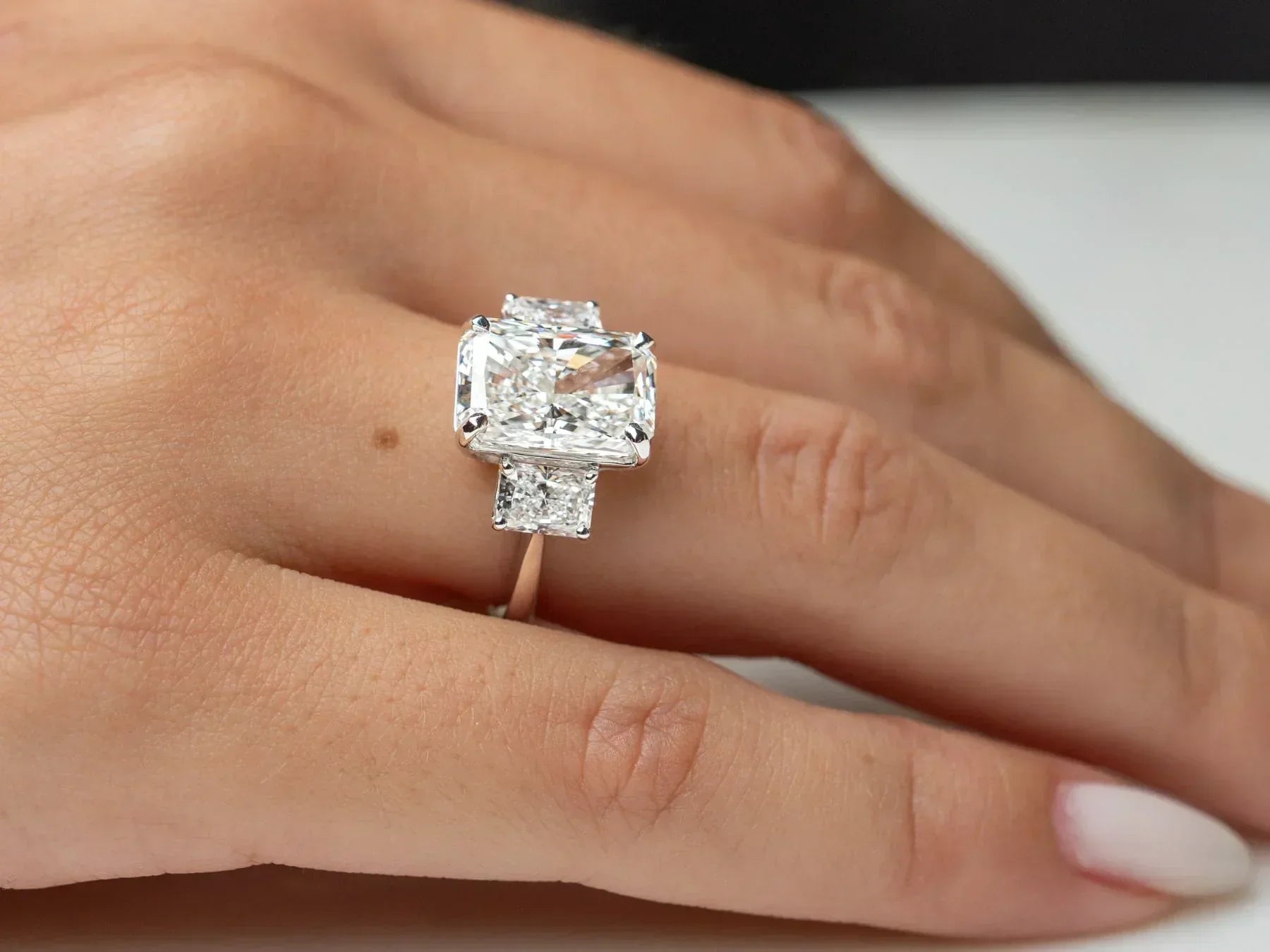
If you are pairing an original natural diamond with lab grown diamonds in an eternity ring, the key is consistency. Because lab grown and natural diamonds look identical to the naked eye, the difference is not about origin. It is about whether the diamonds look like they belong together.
Two factors make the biggest visual difference:
-
Cut controls brightness, fire and overall sparkle. If the lab grown diamonds are cut differently or to a lower standard, they can appear flatter or slightly glassy beside a well cut natural diamond, even if colour and carat weight match.
-
Clarity affects how clean the diamonds look when they sit side by side. If your original diamond is eye clean, your lab grown diamonds should be selected to the same eye clean standard so the ring looks cohesive and refined.

This approach also works beautifully in new designs. Many clients choose a natural centre stone for the heritage factor, then use lab grown side stones or a halo to maximise sparkle and finger coverage within budget. Others do the reverse, choosing a lab grown centre stone and natural accents for personal preference. Either way, matching cut and clarity is what keeps the piece looking intentional and elevated.
Finally, paperwork matters. Ask your jeweller to specify which diamonds are natural and which are lab grown on the invoice, including total carat weights and quality grades where applicable. For larger stones, ensure a grading report accompanies each main diamond. Your insurer should also know exactly what you have, so your cover reflects a like-for-like replacement. I talk about this more here.
Do Lab Grown Diamonds Hold Value the Same Way as Natural Diamonds?
We do not recommend choosing any diamond based on its “holding value”. Diamonds are a meaningful purchase, not a financial investment. The real value of a piece of diamond jewellery is the pleasure you get from wearing it and the memories and sentiments attached to it over a lifetime.
It is also important to separate two different concepts that often get mixed up. Insurance valuation is a figure given as an estimate to replace that piece if it's lost or stolen. It helps you insure your ring for the cost of replacing it like-for-like, at the time you take the policy out. Resale value is what you might receive if you sold the piece of jewellery second hand. That figure is typically a lot lower than the purchase price and can vary widely depending on market demand, the buyer, and the paperwork.
Because natural and lab grown diamonds follow different supply dynamics, their pricing can move differently over time. If you are weighing up the decision, focus on what you will love wearing every day. Beauty, craftsmanship, certification, and how the ring suits you or your partner matter far more than any future resale scenario.
Are Lab Grown Diamonds More Ethical than Natural Diamonds?
Ethics are not automatic in either category. They depend on transparency and standards.
With natural diamonds, the important questions are sourcing and traceability. With lab grown diamonds, the important questions are energy use and manufacturing practices. If this matters to you, ask for clear documentation so you can compare like with like.
We understand the concerns around ethics and transparency in the diamond industry. We work exclusively with GIA and IGI certificated diamonds, whether natural or lab grown, and we never pressure clients toward one option over the other. Our focus is always on client choice. Each diamond is traceable through a report number which is laser inscribed on the diamond itself and which matches its grading certificate, ensuring accuracy, disclosure, and transparency.
What Certification Should I Look for When Buying a Diamond?

Certification matters because it lets you compare diamonds fairly.
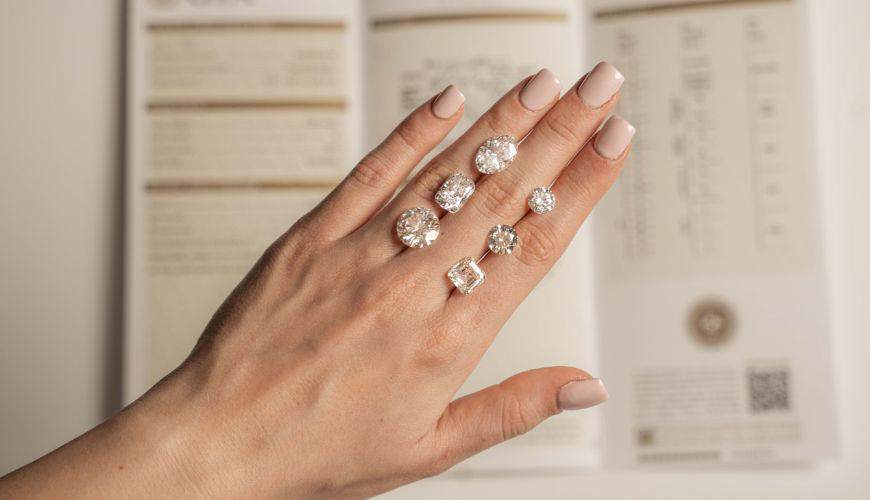
Look for an independent grading report that confirms the key details, including The 4Cs of Diamonds (carat, cut, colour and clarity). It also provides confidence that what you are buying matches what you are being told. If you are choosing between natural and lab grown, certification is one of the simplest ways to feel secure in your decision. Read our blog ‘What Diamond Certification Really Means, and Why It Matters’ here.
What Matters Most When Choosing a Diamond?
If you want the most beautiful diamond on the hand, prioritise sparkle first. Cut is what drives sparkle and life.
Then choose your balance:
- Carat weight for size and presence
- Colour for a bright, white look
- Clarity for a clean appearance without paying for microscopic perfection
This is where expert guidance can save you money, because you can choose grades that look stunning in real life, not just on paper.
How do I Decide between Natural and Lab Grown Diamonds?
Ask yourself three simple questions.

- Do I want a diamond with a rare, natural origin?
- Do I want the biggest or highest grade for my budget?
- Do I want to prioritise legacy, or prioritise flexibility?
When you answer those honestly, the choice usually becomes obvious.
When you're ready to start designing, simply book a consultation, and we’ll help you create a piece that feels timeless and entirely your own.

Rhona, The Diamond Expert