The Truth About Wedding Traditions, and Why Modern Couples Are Rewriting Them

Weddings are often spoken about as though they are built on centuries of fixed tradition. The white dress. The diamond ring. The idea that certain choices are simply part of the ritual.
But when you look a little closer, many of the traditions we now see as timeless are actually far more modern than people realise. Some began as status symbols. Some were shaped by advertising. Some evolved through changing social values, and many are now being redefined again by a new generation of couples.
Today’s couples still care deeply about symbolism, sentiment, and meaning, but they are approaching weddings in a very different way. Rather than asking what they are supposed to do, they are asking what feels right for them. That shift is changing everything from the dress to the ring to the way jewellery is bought and designed.
The White Wedding Dress Was Not Always a Tradition
One of the most enduring myths in bridal culture is that brides have always worn white. In reality, that simply is not true.
For much of history, brides often wore their best dress, whatever colour it happened to be. Practicality mattered. A wedding dress was not necessarily a one day statement piece. It was often a valuable garment that could be worn again. Rich colours were common, and white, while not unheard of, was impractical and expensive to maintain.
The turning point came in 1840, when Queen Victoria married Prince Albert, wearing a white silk satin gown trimmed with Honiton lace. Her choice was widely reported and illustrated, and it had an enormous influence on bridal fashion. The V&A notes that Queen Victoria is commonly credited with making the white wedding dress widely popular, and contemporary fashion historians point out that the choice was also tied to her wish to highlight fine British lace and craftsmanship.
What is particularly interesting is what white meant at the time. It was less about purity in the modern romantic sense and much more about wealth, display, and status. A white silk gown was delicate, expensive, and difficult to clean. It signalled that the wearer could afford luxury and could afford a dress that was not built for everyday use. In other words, what later became romanticised as innocence began, in large part, as a very visible expression of privilege.
Over time, that meaning softened and shifted. As bridal fashion became more commercialised and more accessible, the white dress moved from an elite statement into a social norm. What had once symbolised status gradually came to symbolise tradition itself.
Diamonds Were Made Into A Tradition

The same pattern can be seen in engagement rings.
Today, many people assume that a diamond engagement ring is an ancient essential. In fact, the modern dominance of diamond engagement rings was shaped in large part by one of the most successful advertising campaigns of the twentieth century.
De Beers began aggressively promoting diamond engagement rings in the twentieth century, and in 1947, the slogan “A Diamond is Forever” helped transform diamonds into the ultimate symbol of romantic permanence. Business history research notes that the slogan carried a second purpose, too, suggesting that diamonds should not be resold, which helped protect scarcity and pricing as well as sentiment.
Then came the spending rule.
The idea that a man should spend a set portion of his salary on an engagement ring was not an old custom handed down through generations. It was a marketing device. Early versions of the campaign promoted the idea of one month’s salary, and by the 1980s, the benchmark had expanded into the now famous two months’ salary rule. The point was simple. It gave people a number, removed uncertainty, and reframed spending as proof of seriousness and commitment.
At the time, that rule carried real cultural weight. It suggested that love should be demonstrated through financial sacrifice, and that the value of the ring reflected the value of the relationship. In a consumer culture increasingly shaped by aspiration and image, it was a powerful message.
But this is where the modern shift becomes most visible. Couples today are far more aware of where these ideas came from. They are less interested in following a formula created by advertising and more interested in making thoughtful choices that feel authentic to their relationship. That does not mean the symbolism has disappeared. It means the symbolism is being reclaimed on more personal terms.
According to The Knot’s 2026 Real Weddings Study, nearly 9 in 10 proposers still have a ring in hand when they propose, and 96% of couples exchange rings as a sign of engagement. So the symbolism remains intact. At the same time, the process has become far more collaborative.
- 79% of recipients are involved in the ring selection process
- 88% of rings include custom edits or are custom designed
The engagement ring is still a powerful symbol of commitment. It is simply becoming more personal in the way it is chosen, shaped, and understood.
From Rigid Tradition To Personal Expression

For years, there was a fairly fixed image of what an engagement ring, and even a wedding itself should look like.
The default script was familiar. A diamond solitaire, a classic band, a white dress, a formal venue, and a set of expected rituals around the day. There was comfort in that structure, but there was also pressure. Weddings could become performances of tradition rather than reflections of personality.
Now, couples are working from a different starting point. The question is no longer, “what should we choose?”, but “what feels like us?”.
This is not a niche shift. It is happening at scale. The Knot reports that Gen Z now makes up 41% of the wedding market, and their influence is unmistakable. Traditional, cookie cutter weddings are giving way to celebrations shaped by authenticity, intention, and personal expression. The same report found that 90% of couples aim for an authentic, highly personalised wedding. In other words, tradition has not disappeared. It has become more selective.
In Ireland, the average wedding spend has risen to €36,641, up 6.5% year on year. Yet what stands out is not just the rising cost, but how couples are making decisions within it. According to the 2025 Irish Wedding Survey by Weddingsonline.ie:
- 54% of couples said reviews and recommendations were the deciding factor when booking
- 12% said the lowest price mattered most
That feels telling. Couples are still investing. They are simply becoming more considered about where that investment goes. They want quality, trust, craftsmanship, and decisions that feel worth making.

That shift is visible across the bridal world. In jewellery, it means couples are embracing coloured gemstones, unusual cuts, mixed metals, antique stones, re-designed heirlooms, and custom details that feel intimate and specific. In the wedding itself, it means stripping back anything that feels generic and leaning into details with genuine emotional value.
Current data reflects that instinct clearly. The Knot found that:
- 79% of ring recipients take part in the selection process
- 88% of couples make custom edits or custom design a ring
What couples increasingly want is not just a ring, but a piece of jewellery that tells their story.
This is not a rejection of tradition for the sake of it. It is a move towards intention. Couples are not necessarily less sentimental than earlier generations. If anything, they are often more emotionally engaged with what they choose. They simply want each choice to feel considered, personal, and true to their own story.
Why Bespoke Jewellery is Becoming More Important

One of the clearest expressions of this shift is the move away from anonymous, mass market buying and towards custom and bespoke jewellery.
High street jewellery will always have a place. It is accessible, familiar, and convenient. But more couples are now looking beyond the high street because they want something with more character and more connection. And they want to be in the driving seat, designing it.
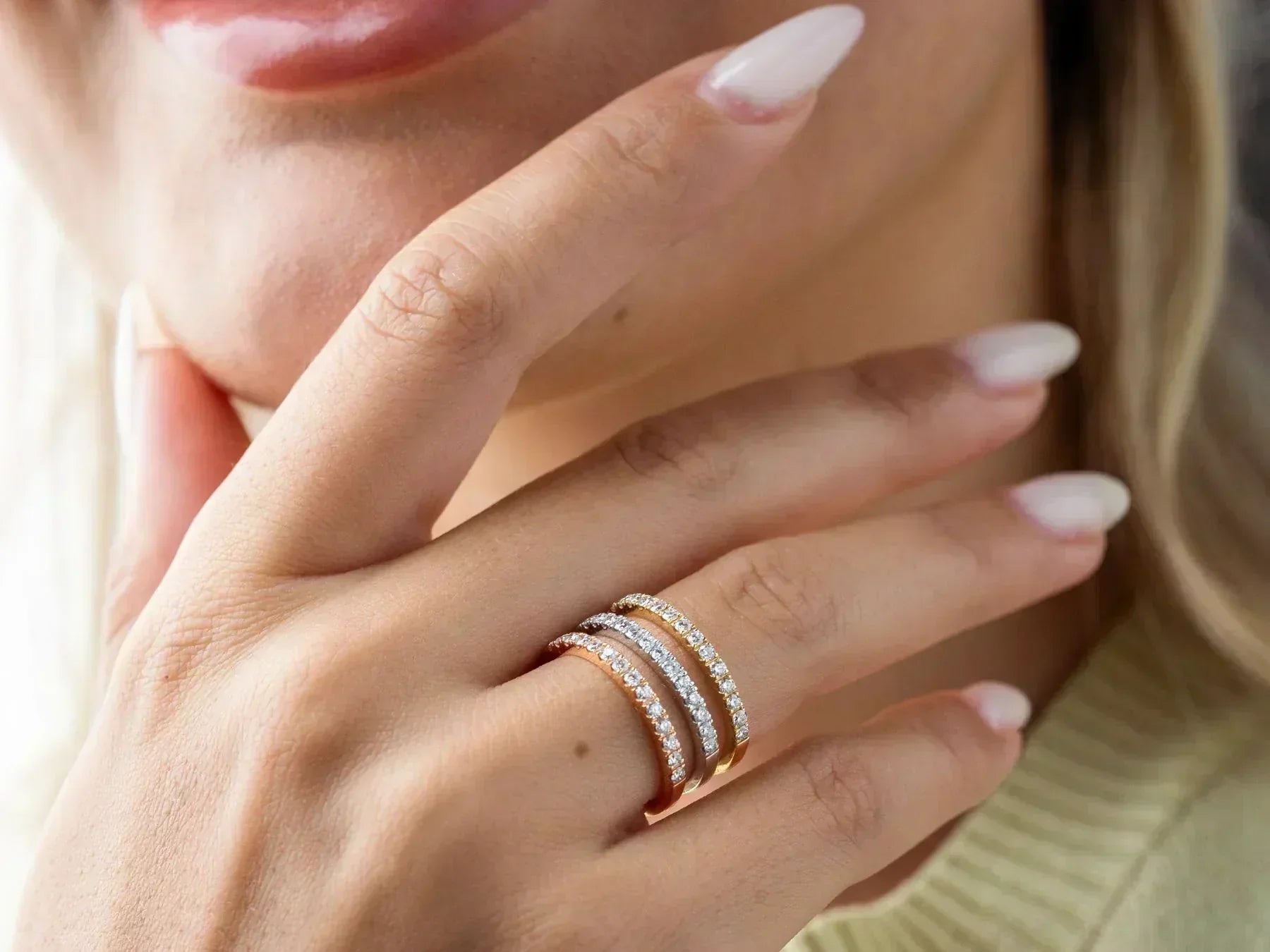
A bespoke ring offers something a standard display case often cannot. It allows the piece to hold meaning beyond the obvious. It can reflect a couple’s aesthetic, their memories, their shared references, even their values. A design might be inspired by a family heirloom, a particular era, a meaningful stone, a favourite shape, or simply the desire to create something that does not look like everybody else’s. That is a powerful draw.
What couples increasingly want is not just a ring, but a piece of jewellery that tells their story.
That storytelling aspect matters. In a world where people are surrounded by endless imagery and infinite choice, individuality has become a form of luxury. A bespoke ring feels deliberate. It feels emotionally richer. It also often feels more lasting because it has been built around the person who will wear it.
The New Investment Mindset Around Bridal Jewellery

There has also been a broader change in how couples think about value.
The old logic of bridal jewellery often focused on external benchmarks: spend this amount, choose this stone, follow this formula. The newer mindset is far more thoughtful. It is less about hitting a number and more about making a lasting decision.
That investment mindset does not necessarily mean treating jewellery like a purely financial asset. It is more nuanced than that. Couples are thinking about longevity, craftsmanship, wearability, and emotional worth. They want to know that what they are buying will still feel beautiful, relevant, and meaningful many years from now.
That often leads to different decisions.
Some couples choose quality over size. Some move away from a standard diamond and towards a stone or design that feels more individual. Some invest in craftsmanship and custom design rather than a recognisable formula. Some want a piece they can imagine wearing every day for decades, rather than something chosen to satisfy expectation in the moment.
With rising living costs and greater awareness around spending, this kind of careful decision making feels especially relevant. People still want beauty, symbolism, and occasion, but they also want substance. They want the purchase to feel worth it, not because it follows a rule, but because it reflects something real.
The Future of Bridal is More Personal, Not Less Meaningful

What makes this moment so interesting is that the emotional importance of weddings and jewellery has not disappeared. It has simply changed shape.
The white dress began as an expression of status before becoming a romantic tradition. The diamond ring became culturally dominant through brilliant advertising before being absorbed into the language of love. Now, couples are taking those symbols and asking more of them. They want them to feel personal. They want them to feel honest. They want them to mean something specific, not just something inherited.
That is why bespoke jewellery, thoughtful design, and more individual bridal choices are resonating so strongly right now. Weddings are becoming less about following a script and more about telling a story.
And perhaps that is what modern tradition really looks like, not doing what has always been done, but choosing what will still feel meaningful to you in years to come.
If you are choosing a ring and want guidance that feels thoughtful, personal, and true to your story, book a consultation with Rhona or send us a message on WhatsApp.

Rhona Fitzpatrick
Private Jeweller
The Diamond Expert

Written by Rhona Fitzpatrick, Private Jeweller and CEO of The Diamond Expert